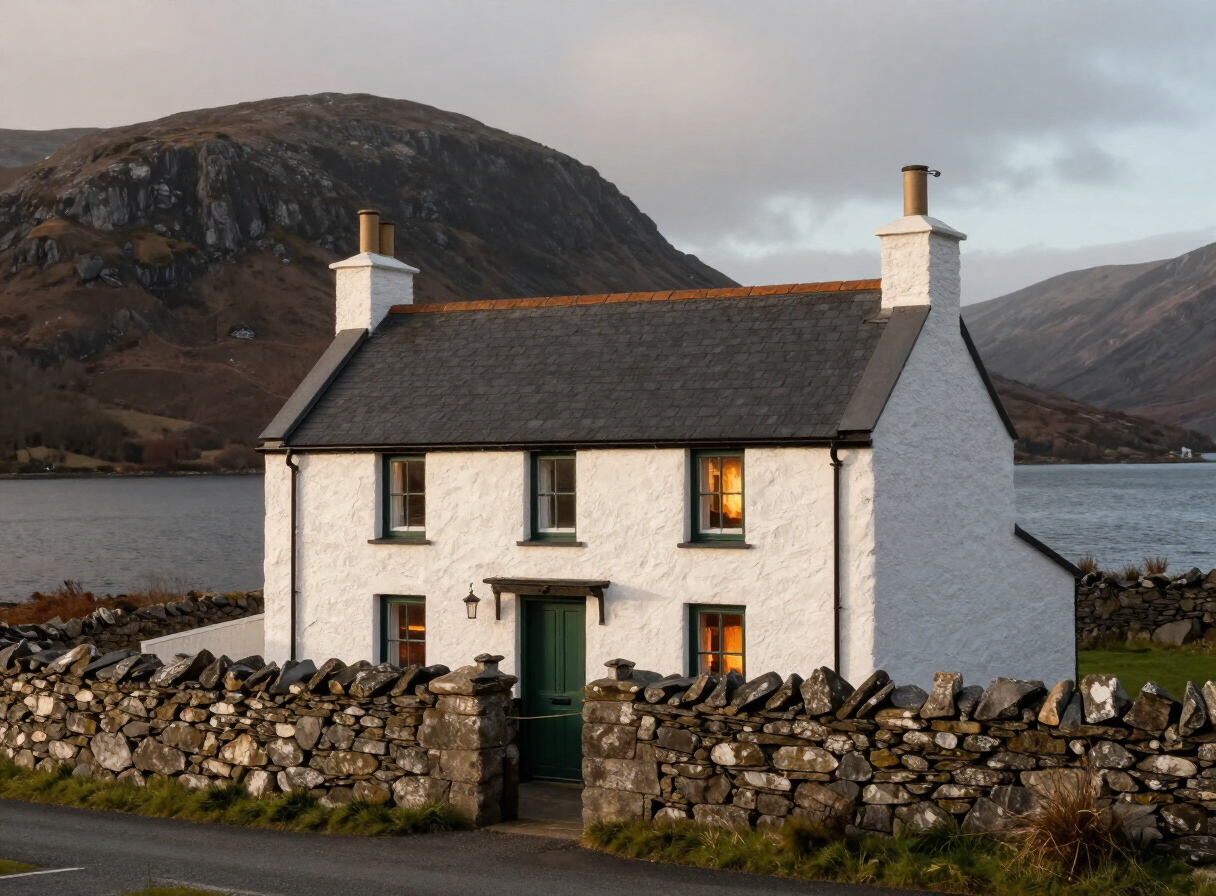
From village inns to coastal campsites, your overnight stops shape the trip just as much as the road. Plan them with a little care.
On a long drive, it is easy to think of accommodation as a place to sleep between the interesting parts. On the North Coast 500, it is often part of the interesting bit. A warm room after a wet day on the coast, a hot meal in a village pub, or a quiet evening on a campsite overlooking the sea can be the moments people talk about longest afterwards.
Book earlier than you think
The north Highlands have a limited amount of accommodation, and the most popular stops fill up months ahead between late spring and early autumn. Small places can have just a handful of rooms, and some hosts run their business alone. If you have a fixed date and a particular place in mind, book as soon as you can. If your plans are flexible, the shoulder seasons of spring and early autumn are quieter, and many places have better availability.
Check minimum stay rules, especially at weekends and in summer. Some places only take two-night bookings at busy times, which is worth knowing before you build a plan around a single night.
Choose where you stay, not just where you stop
It is tempting to pick the next place along the road. A better way to plan is to decide which parts of the route you most want time in, and then to stay there rather than somewhere in between.
Spending two nights in one place often improves a trip more than anything else. You unpack once, you stop watching the clock, and you can explore the area on foot or by bike without needing to drive for hours. Places like Applecross, Gairloch, Ullapool, Lochinver, Durness and Tongue all reward a longer stay.
The main options
Village inns and hotels. A good inn is the heart of a Highland village, with a bar, a restaurant and often a few rooms upstairs. They are a reliable choice for a warm welcome and a proper meal, and they are often the only place for miles that serves dinner.
Bed and breakfasts and guesthouses. Often family run, these are among the best ways to get local knowledge. Hosts will usually tell you which beach is quietest, where to see wildlife and which road is best in the wind. A good breakfast sets you up for a long day.
Self-catering cottages. These suit longer stays, families and anyone who wants space to cook and relax. They are often available by the week, so they work best at the heart of a longer trip.
Hostels and bunkhouses. Good value, sociable and often in remarkable places. They are particularly useful for walkers, cyclists and motorcyclists, and many have drying facilities.
Campsites and caravan parks. Some of the finest sites in Scotland are on this coast, often right beside a beach. Pitches with a view can be booked out well in advance, so plan ahead. Many are small and simple, so check facilities before you arrive.
Motorhome stops. Official sites and stopovers are growing in number, but spaces are limited. Check the size limits for your vehicle, because narrow access roads and small car parks can be a real problem for larger motorhomes.
Practical things worth checking
- Cancellation terms. Weather and road conditions can change a plan, so flexible bookings are worth the effort.
- Evening meals. In smaller villages, kitchens may close early or stop serving on certain days. Book dinner when you book the room, or ask your host for advice.
- Access and parking. Check whether the road to your accommodation is single-track, steep or unsuitable for larger vehicles.
- Charging. If you drive an electric vehicle, ask whether there is charging on site or nearby, and plan your route to include it.
- Midges. In summer, a midge-free spot or a screened outdoor space makes a real difference. Ask your host what to expect.
- Arrival times. Many small places have no reception desk, so let your host know when you expect to arrive, especially if you will be late.
Stay local, spend local
The money you spend on a night away stays in the community when you choose a small business. Eat in the village, buy supplies from the local shop and ask your host where else is worth supporting. It is one of the simplest ways to make sure the trip does good as well as feeling good.
Be a good guest
Many of the places you will stay are someone's home or small family business. Arrive when you said you would, keep noise down in the evening, respect shared spaces and leave things as you found them. If your plans change, tell your host as early as you can, because a cancelled room at short notice can be a real loss to a small business.
Make it yours
Every traveller's ideal stop is different, and there is no wrong answer. What matters is choosing places with some thought, leaving enough time to enjoy them and remembering that the best nights are often the ones you didn't plan to be quite so good.
A starting point, not a fixed plan. Check current conditions, opening times and local advice before travelling.