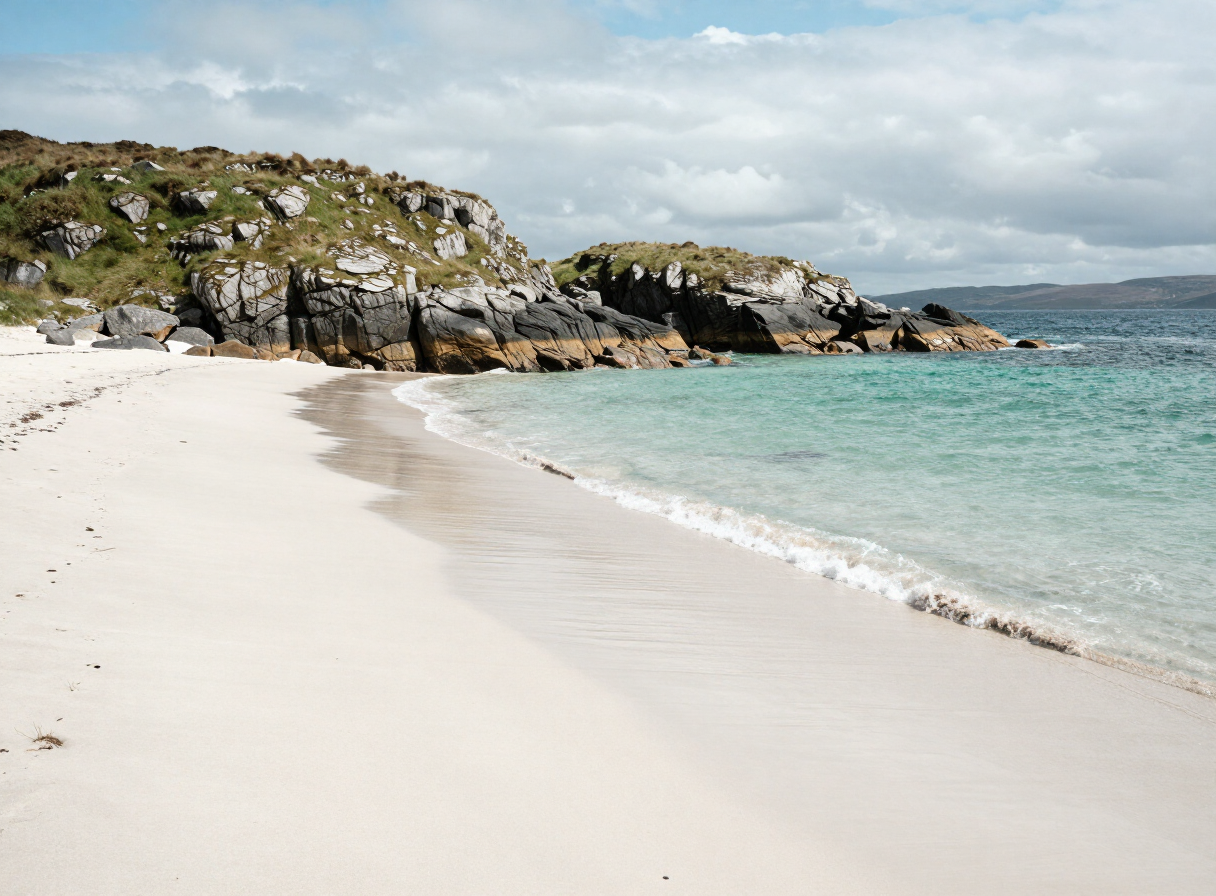
The northwest coast offers shell-sand bays, wild headlands and a surprising range of blues. Here is how to enjoy a beach day responsibly.
Few people expect to find white sand and turquoise water in the Scottish Highlands, which is part of what makes the first sight of one so memorable. The colour comes from crushed shell, which lightens the sand and lets the sea glow above it. On a clear day, the effect is closer to the Caribbean than the Atlantic. The temperature of the water, it should be said, is another matter entirely.
A few bays worth knowing
This is a starting point rather than a complete list. Part of the pleasure here is discovering a bay of your own.
Around Gairloch and Wester Ross. Big Sand and the beaches near Redpoint are good for a first day on the coast, with views across to the Isle of Skye and the Outer Hebrides on a clear day. Further north, Gruinard Bay and the sands around Mellon Udrigle look out towards the Summer Isles and the mountains behind them.
Around Lochinver and Assynt. Achmelvich is one of the best known beaches on the route, and its pale sand and clear water are easy to love. Clachtoll, a little further south, has a quieter feel and a distinctive rocky shore. Both are popular in good weather, so arriving early or late will give you more space.
Around Kinlochbervie and Sandwood Bay. Oldshoremore is a gentle, sheltered beach for those who want somewhere easy and uncrowded. Sandwood Bay is another thing altogether. It lies at the end of a walk of around four miles each way from Blairmore, and it has a remote, wild beauty that rewards the effort. Allow a full half day, take proper footwear and check the weather before you set out.
Around Durness. The beaches around the village are some of the finest on the whole route. Balnakeil has a long sweep of sand backed by dunes, and Ceannabeinne is a beautiful, sheltered bay a few minutes away. After a day here, even the most hurried traveller tends to slow down.
The north coast. Further east, Coldbackie near Tongue, Farr near Bettyhill and Torrisdale Bay each have their own character, with wide skies and views that feel a long way from anywhere else.
Reading the water
The sea here is cold all year round, even in summer. Cold water shock is a genuine risk, so enter slowly rather than diving in, and keep swims short and close to the shore. Most of these beaches have no lifeguards, and rip currents, sudden drop-offs and changing tides can catch out even strong swimmers. If the swell is up or the wind is blowing offshore, a paddle is wiser than a swim. Never go in alone, and keep a close eye on children.
Check tide times before you walk out to rocks, islands or between bays. The sea can cut off a route faster than you would think.
Looking after the place
The dunes and grassy areas behind many of these beaches are machair, a rare habitat that is home to wildflowers, insects and ground-nesting birds. It is also surprisingly fragile.
- Stay on paths where they exist, and avoid trampling the dune edges.
- Take your litter home, including food scraps and anything left by earlier visitors if you can manage it.
- Do not light fires on or near the machair or on the dunes. Fires can smoulder underground and spread without warning.
- Give wildlife space. From spring into summer, birds nest directly on the sand and in the shingle. Seals haul out on quieter shores. If an animal looks disturbed, you are too close.
- Keep dogs under close control or on a lead during the nesting season, and never let them chase seals or birds.
- Do not drive on the beach or park on the grass. If the car park is full, come back later or move on.
- Be considerate if you camp. Scotland's access rights allow responsible camping on much of the land, but they do not extend to vehicles, and popular spots can suffer when too many people stay in one place. Leave no trace and use proper facilities where they exist.
What to bring
A beach day on the northwest coast is rarely warm enough to simply turn up in a swimsuit. Pack layers, a windproof jacket, a flask of something hot and a towel that dries quickly. Sandals or old trainers are useful for rocky entries, and sun cream matters more than you might expect, because bright light off pale sand catches people out. In summer, a midge repellent is often the most important thing in the bag.
Make it yours
The best beach days here tend not to be planned. They happen when the weather opens up, the tide is right and you have enough time in the day to stop. Keep your itinerary loose enough to leave room for that, and treat each bay as a place you are visiting rather than somewhere you are simply passing through.
A starting point, not a fixed plan. Check current conditions, opening times and local advice before travelling.